
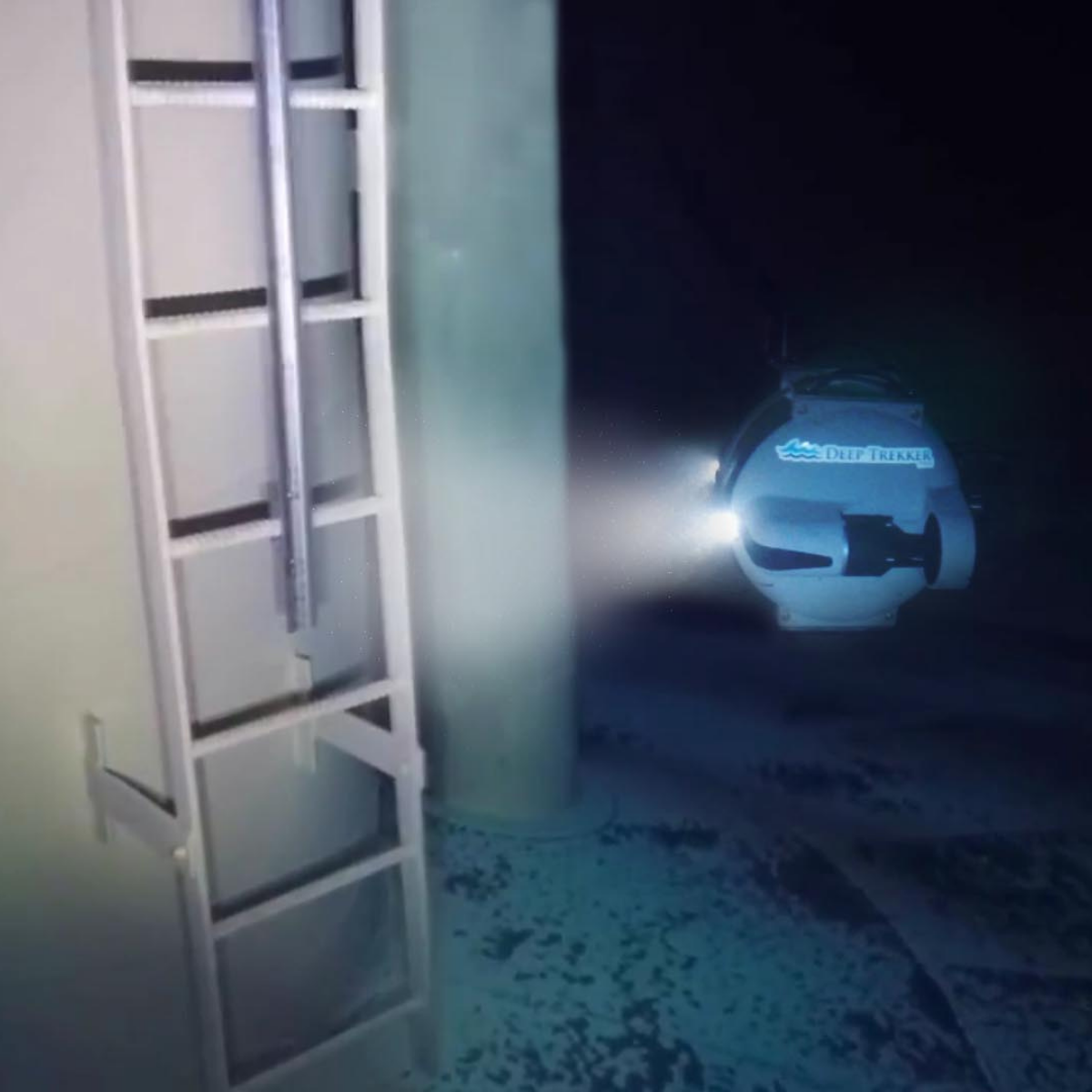
Maintaining the structural integrity of offshore oil platforms requires regular and detailed underwater inspections. As operations expand into deeper and more demanding waters, remotely operated vehicles (ROVs) provide a safe alternative for inspecting submerged infrastructure by replacing traditional diver-led methods.
Why ROVs Are the Modern Solution for Offshore Inspections
Offshore inspection scenarios are tough and require heavy-grade equipment. Using ROVs for oil platform underwater inspection helps address the distinct challenges posed by these environments while prioritizing safety protocols and financial efficiency.
Overcoming Safety Hazards
Strong currents, extreme pressures and poor visibility create treacherous conditions that put human divers’ lives in danger. Using uncrewed underwater drones ensures safer operations by replacing human-dependent tasks and allowing personnel to remain safely topside while machines perform the actual surveys.
Boosting Cost-Efficiency
Diver-based inspections need specialized support vessels and follow specific rules about how long they can stay at the bottom. Unmanned systems eliminate that risk, as they can work for longer periods with minimal to no interruptions. How much does an oil rig inspection ROV cost? The price of the machine really depends on its capabilities, but the long-term savings from having less downtime and fewer crew requirements offset the capital investment.
Accessing Complex Underwater Structures
Divers have to wear bulky gear, so it is exceptionally difficult to inspect challenging geometries, such as rise clamps and joint welds. Remotely-operated compact inspection units can easily fit into tight spaces and capture precise visual data from angles that human operators typically cannot reach.
Key ROV Specifications for Oil and Gas Operations
Comparing ROVs for gas and oil rig maintenance and inspection starts with knowing what to look for. The following specifications help determine if a system is suited for tough underwater work.
Depth Rating
Offshore platforms go from the turbulent splash zone all the way down to the seabed, therefore requiring equipment capable of handling intense hydrostatic pressure. In such cases, the depth rating needs to exceed the maximum operational requirements to prevent equipment failure.
High-Resolution Imaging
High-resolution 4K cameras and strong LED lighting are necessary to see through dark, particulate-filled waters. The better the image quality, the more accurately teams can point out microscopic cracks and heavy marine growth on critical structural parts. Without these high-res visual sensors, operators cannot conduct thorough and accurate evaluations.
Durability and Maneuverability
A system must be built with high-impact materials to survive daily offshore use, particularly given the intensity and unpredictability of ocean currents and swells. Vectored thrusters and advanced control systems are critical to holding a stable position against strong tides. They also enable the ROV to easily move through tight underwater spaces while gathering data.
Portability and Speed
Large work-class systems need heavy-lifting machines and support vessels to function efficiently, but these can increase deployment times and operating costs. Battery-powered systems, on the other hand, have a distinct advantage because of their rapid deployment capabilities. Marine research organizations state that new generations of highly portable underwater vehicles expand access to the deep sea by requiring fewer operators and smaller vessels. A single pilot can launch these compact units directly from the platform.
What ROVs Are Best for Underwater Oil Rig Inspections?
Five ROVs stand out for their depth capability, imaging quality, durability, maneuverability and overall system portability. These providers offer solutions suited to the energy sector’s various offshore needs.
1. Deep Trekker
Deep Trekker Inc. is a leading manufacturer of portable, battery-powered underwater ROVs and robotic crawlers. It has over a decade of proven expertise and delivers high-quality underwater robots suited to a wide range of inspection tasks across the offshore wind, oil and gas industries. It focuses on creating resilient and easy-to-use systems that do not require massive topside support infrastructure. Such an accessible design philosophy makes its industry-leading technology affordable for numerous commercial operators.
Deep Trekker’s main advantage is its extreme portability and rapid deployment. The battery-operated design and handheld controller mean a single operator can man the vehicle from the platform. No formal training is required to pilot the system effectively.
The company also emphasizes a maintenance-free construction that uses magnetic couplers instead of dynamic seals that need regular greasing. Its flagship DTG3 and REVOLUTION ROV models, along with DT340 and DT320 MINI pipe crawlers, perfectly embody this practical approach. The company provides excellent customer service and offers a free budget proposal quote.
Key Features
- Battery-powered system for rapid deployment from any platform or vessel
- Patented pitching system for maneuverability in confined spaces
- Maintenance-free design using magnetic couplers and a highly portable build
2. VideoRay
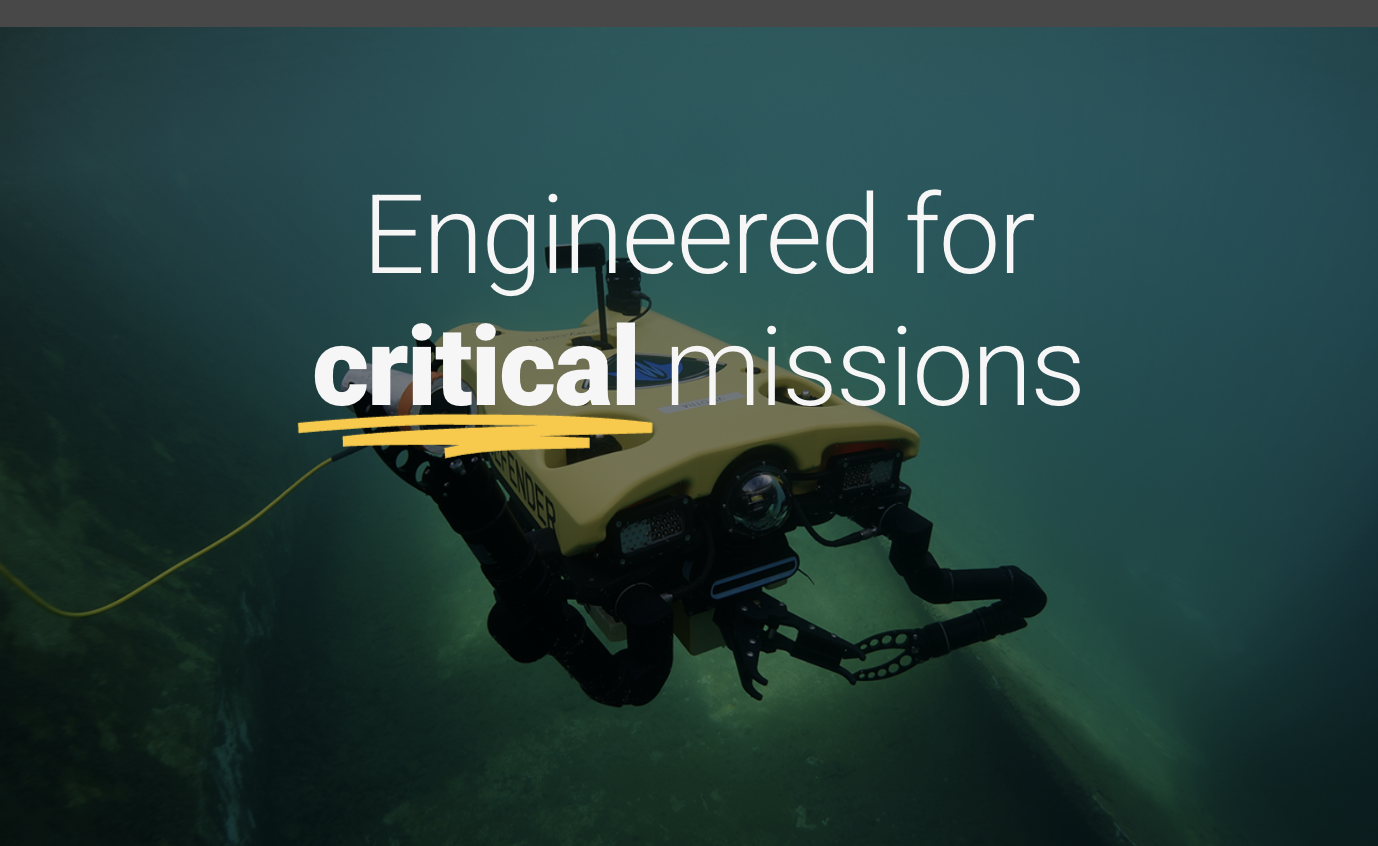
VideoRay is renowned for its highly customizable systems in the inspection-class market. It offers a range of vehicles for the defense and energy sectors and is particularly known for its raw power and ability to operate in strong ocean currents.
VideoRay offers high modularity, enabling users to easily add a wide range of sonars and specialized sensors to the inspection process. Its systems act as a bridge between highly portable mini-ROVs and larger, intricate underwater vehicles.
Key Features
- High-powered thrusters withstand strong currents
- Extensive modularity for adding advanced sensors and tools
- Trusted by defense and industrial clients for mission-critical work
3. Oceaneering International
Oceaneering International is an industrial giant in the offshore energy space, providing extensive fleets of heavily equipped underwater vehicles. It typically conducts the intricate surveys itself rather than merely selling the hardware to external operators.
Its underwater vehicles can perform heavy-duty construction, repair, maintenance and intervention tasks at extreme ocean depths. These massive work-class units come with advanced manipulators and heavy tooling that go far beyond simple visual observation, which are essential for large subsea projects requiring significant physical intervention.
Key Features
- Capable of heavy intervention and construction work
- Operated by highly trained crew as part of its service
- Offers extreme depth and heavy-lift capabilities for major projects
4. Saab Seaeye
Saab Seaeye specializes in electric underwater robotics and manufactures everything from compact observation vehicles to large work-class systems. Its products have earned a positive reputation for their reliability and advanced technology, particularly in the electric propulsion space.
It offers a wide range of underwater vehicle models. Its popular Falcon unit leads the market for the ability to conduct detailed observation tasks and routine subsea surveys.
Key Features
- Powerful and reliable electric thruster technology
- Advanced iCON intelligent control system for precise handling
- Offers a wide range of vehicles from observation to work-class
5. Forum Energy Technologies
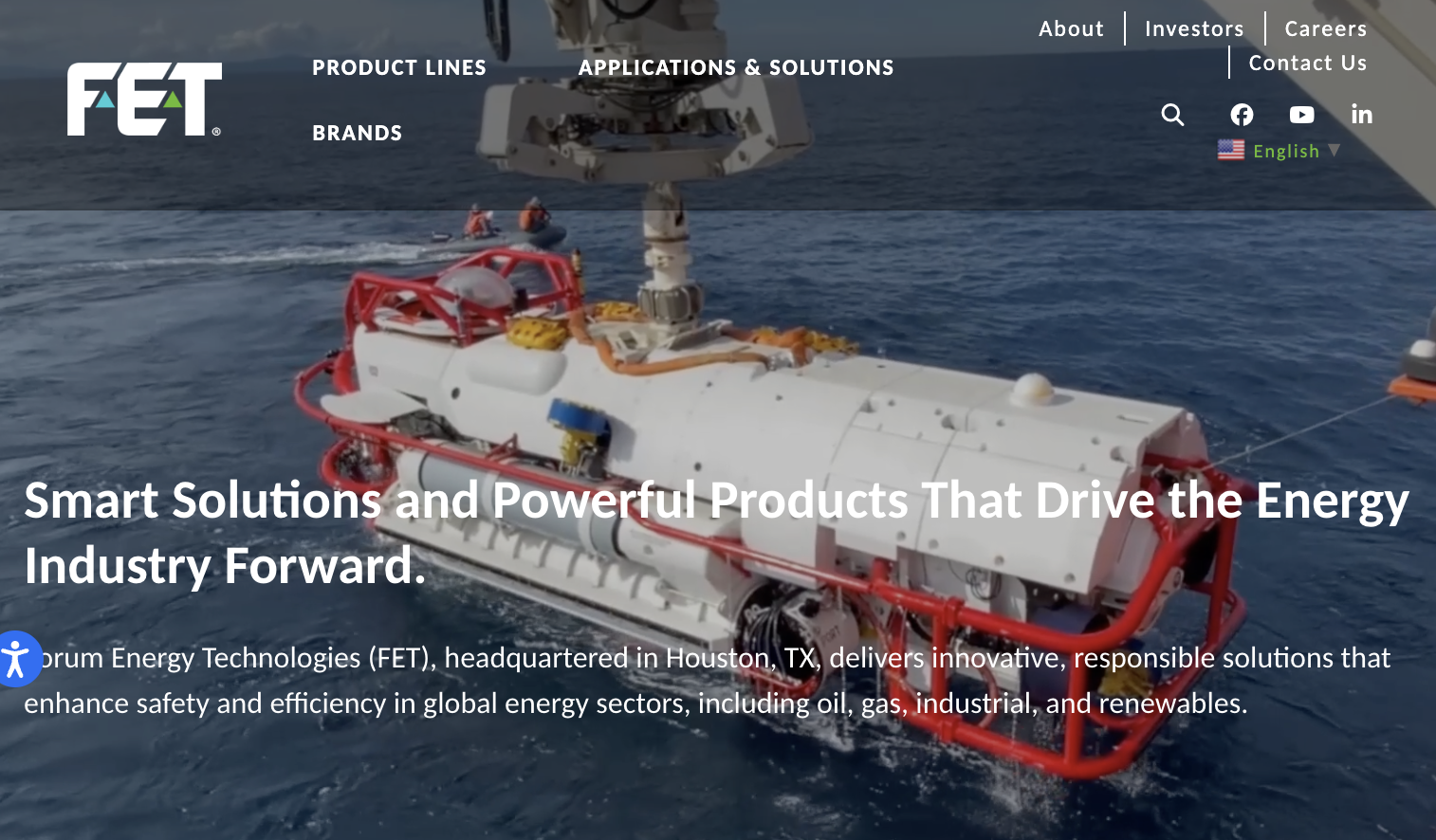
Forum Energy Technologies‘ Perry and Sub-Atlantic brands feature a wide range of typical observation units and heavy work-class systems, which include ROVs, subsea trenchers and tether management systems. It also offers launch and recovery systems, Dynacon winches, ICE Unity remote operations software, and VisualSoft data and acquisition software.
Its underwater engineering expertise is backed by its well-known Moffat brand, which covers subsea pipeline inspection, gauge launch and delivery systems, and subsea production equipment.
Key Features
- Wide range of subsea vehicles performing observation to heavy-duty work
- Renowned Sub-Atlantic, Perry and Moffat brands are among the most highly rated in the industry
- Proven track record in demanding energy sector applications
Effective Offshore Maintenance Begins With Smarter Technology
Modernizing offshore asset management starts with introducing underwater robotics to complement human expertise and skills. The technology continues to evolve, but combining such advanced vehicles with AI-driven data analysis is what can propel the industry toward proactive maintenance, ensuring safer energy operations for many years to come.